Commercial cleaning
How to prove cleaning was completed
A slip-and-fall case shows what happens when a cleaning log meets a second record that nobody on the crew made. A court had to decide what twenty-four minutes of a store’s sweep log were worth.
A sweep log that said 5:29 to 5:53
On a January evening in 2014, a shopper slipped in a puddle of water in the produce section of a Georgia grocery store. The store’s inspection plan called for six complete sweeps a day, each keyed into the store’s computer by the employee who did it, with a numeric code. That day’s log showed a storewide sweep starting at 5:29 p.m. and finishing at 5:53 p.m., the same minute as the fall. The store’s surveillance video showed the clerk the log credited with the sweep helping customers at a register when the sweep supposedly began, and cleaning a restroom when it supposedly ended. The manager testified that the sweep was not completed and could not explain the log. A jury found for the shopper in 2017, and the trial judge set that finding aside. In February 2019 the Court of Appeals of Georgia reversed that ruling: conflicting evidence on whether the store’s inspection program was actually carried out was for a jury to weigh. It also upheld the trial court’s alternative order for a new trial (the court’s opinion, decided February 21, 2019).
Look at what the store had. A written plan. A logging system. An entry with two exact times. That paperwork stopped settling anything once a second record, made by a camera the clerk did not control, put her somewhere else. The question the court framed was whether the program was carried out that day, not whether it existed.
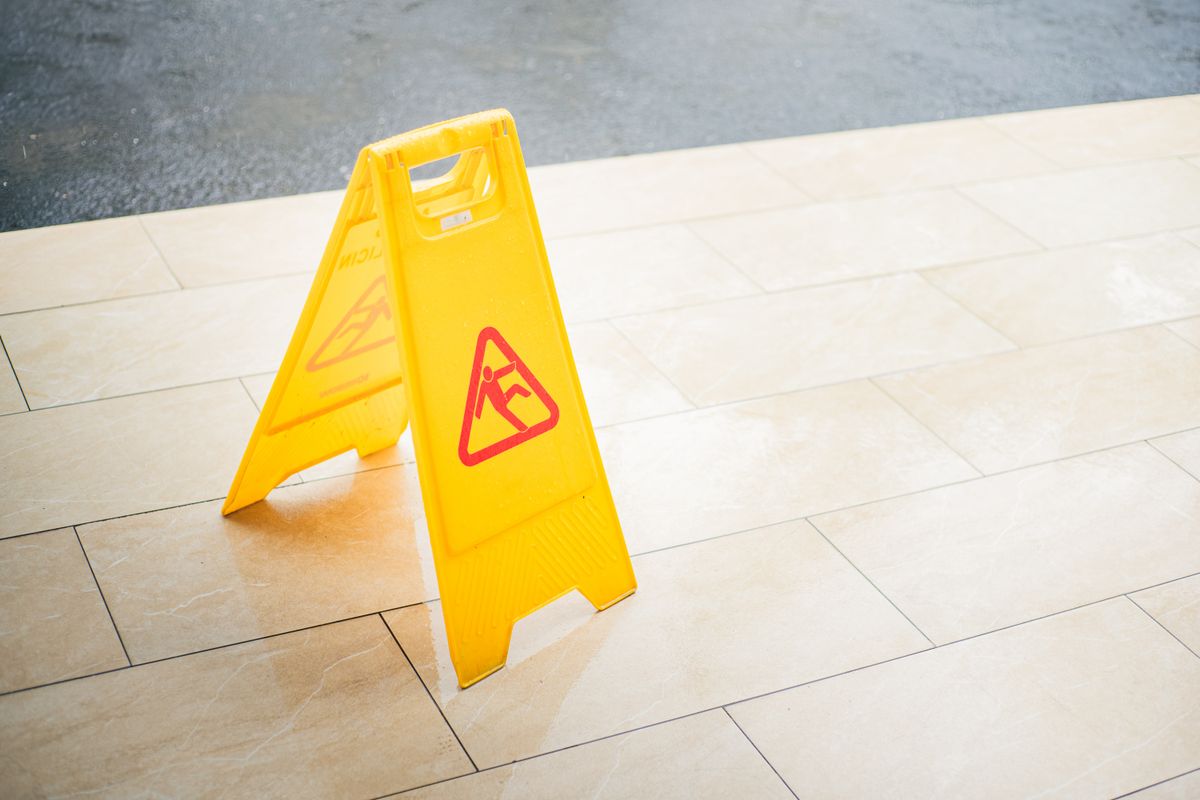
A log the cleaner fills in is a claim
When a cleaning log, a checklist or a work order is filled in by the person whose work it describes, it shares a feature with that sweep log: the entry comes from the one person with a stake in what it says. That does not make the entry false. Plenty are true, written by people who did the job. It makes the entry a claim, and a claim reads the same whether the floor was swept or not, which is why a doubtful client, auditor or adjuster may discount it. A sheet countersigned by a supervisor or the client’s own inspector is a different record: it adds a second person’s word.
How hospitals measure a clean
One detailed answer to “was it cleaned?” comes from hospitals, where a missed surface can spread infection. The CDC toolkit Options for Evaluating Environmental Cleaning (December 2010) compares five ways to evaluate how a patient room is cleaned: watching the cleaning directly, swab cultures, agar slide cultures, fluorescent gel dabbed on surfaces beforehand, and ATP swabs read with a handheld meter. Its score is a plain ratio. Objects found cleaned, divided by objects checked, times 100.
Two lines in that toolkit travel well past a hospital. It says there is no standard method for measuring how clean a surface actually is. And it asks that the checking be done by people who are not part of the cleaning program, so the results stay valid. The Georgia sweep log had the opposite arrangement: the clerk keyed in her own sweep.
An office-cleaning contract may never call for ATP swabs in a lobby. The principle carries over anyway: a clean is easiest to back up with a record the cleaner cannot backdate and a seal that shows a later edit, checked now and then by someone who was not on the crew.
Three records of a clean, side by side
Each of these records answers a different question.
| What the record holds | Live photo through a texted link | Checklist or log the cleaner fills in | Spot check (gel marker or ATP swab) |
|---|---|---|---|
| Who makes it | The cleaner, through the live camera the link opens | The cleaner | A checker, ideally outside the crew |
| Source of the time | Our server, as the photo lands | Whatever the form or system records | When the checker records the result |
| How often it runs | Every clean you ask a photo for | As often as your policy sets | A sample of rooms, as often as your policy sets |
| What it shows | What the camera saw, sealed so an edit is detectable | That the cleaner says the area was done | Whether the marker was removed, or the ATP reading, on the sampled surfaces |
| Location | GPS when the cleaner shares location | As written | The room the checker samples |
What a completion record has to answer
When a client questions last night’s clean, five questions matter. Here is what each one rests on when the record is a photo sent through a link.
- Which area? One photo per area you name in the contract: the second-floor restroom, the lobby floor, the break-room sink. A photo of “the building” answers nothing.
- When? A phone shows whatever time its owner sets. Our server stamps the record as the photo lands, so “9:42 p.m.” is the server’s arrival time for that photo, not a number somebody typed.
- Was it captured live? The link opens the phone’s live camera, and picking a saved picture from the phone’s gallery is blocked. The photo shows what the camera was pointed at; it does not show who held the phone. Nothing gets installed, and nobody signs up for an account.
- Has it changed since? A SHA-256 fingerprint is computed over inputs that include the photo and the server-set time, plus the coordinates when the cleaner shares location. Edit the record afterward and the fingerprint stops matching, so the edit shows.
- Was location shared? If the cleaner shares location, the phone’s GPS reading is saved with the submission, and a setting makes a reading mandatory before anyone can submit. A reading records where the phone reported it was; on its own it does not prove the crew was on site. For a stay you want timed, assignments with Visit Mode turned on get a check-in photo and a check-out photo, each with a server-set time, and the time between them.
What the photos leave open
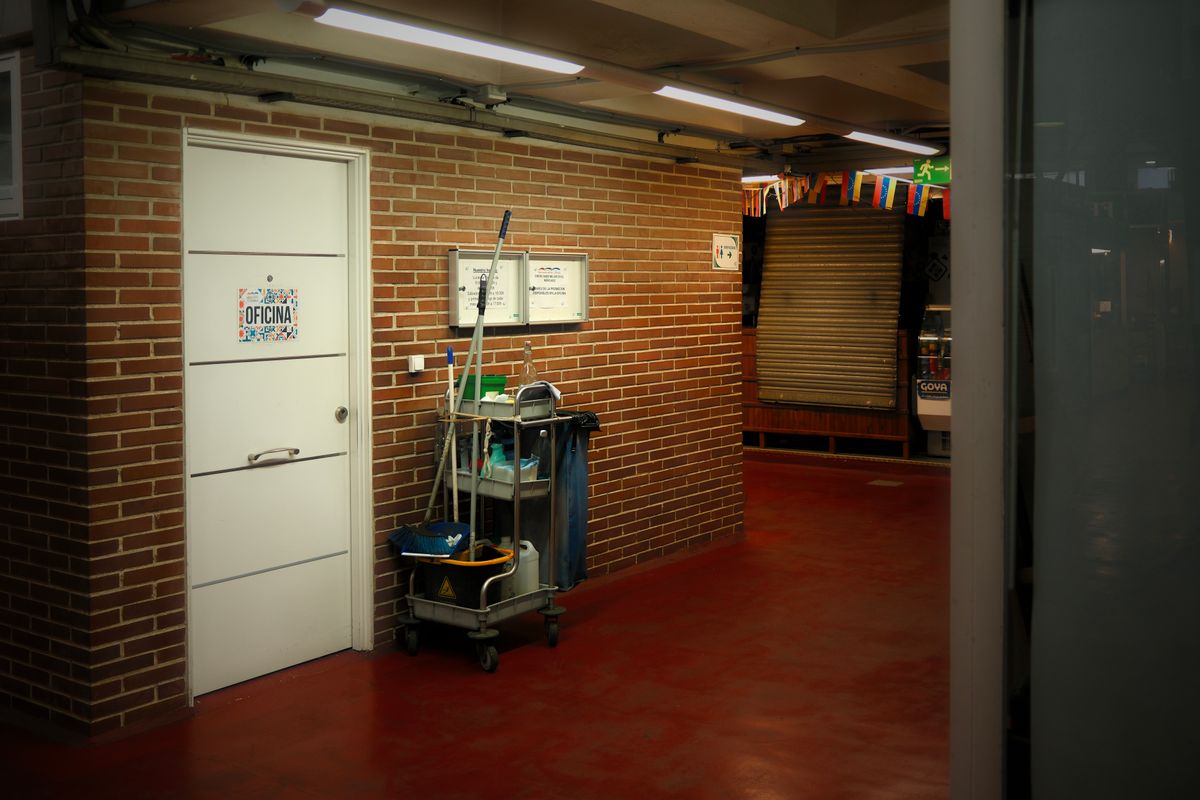
Here is what a sealed photo establishes. A live camera picture came in through that clean’s link, stamped with the server’s time, and the record has not changed since. It does not show the surfaces outside the frame. It does not certify the scene. A cleaner could photograph one good sink and skip the second.
So pair them the way the hospital toolkit does: photos for each area you ask for, and a walk through a sample by someone outside the crew. The log in Georgia had two exact times on it. What it was missing was a witness.
Where LockProof fits
LockProof, field work verification software for commercial cleaning contractors and other field service teams, builds the photo half of that pairing. The cleaner photographs each finished area through a texted link. If a scheduled check goes unanswered past its window, an email goes to the manager listed for that cleaner, a setting you can switch off. The setup for commercial cleaning crews shows how sites and cleaners map onto it.
When a client questions a night, you send one signed link. Your client opens it in an ordinary browser without signing up, and it works for seven days. Pricing the recordkeeping into a contract? The page on proof of service for commercial cleaning covers plans and the client hand-off. Wondering whether a timestamped photo holds up on its own? Read our piece on timestamp photos as proof, and for unit turns, how to verify a turnover was completed.
Common questions
How do you prove cleaning was completed?
Keep a record of each clean whose time the cleaner cannot type: a photo of every finished area taken through a live camera, a time the server sets when the photo arrives, and a fingerprint that makes a later edit detectable. Add GPS when the cleaner shares location, and have someone outside the crew spot-check a sample.
Is a cleaning checklist proof the work was done?
A checklist the cleaner fills in records that the cleaner says the work was done, so it carries the weight of a claim. In a 2019 Georgia appeal, a store’s sweep log, keyed in by the employee it credited, showed a sweep that the store’s video put in doubt. Keep the checklist, and pair it with a server-timed record.
How do I know if my cleaner actually cleaned?
Ask for a photo of each finished area through a link that opens a live camera and blocks picking a saved picture from the gallery; the time is set by a server, not the phone. Then walk a few areas each month. The photos cover each area you ask for; the walk checks what sits outside the frame.
Can you prove cleaning without a site visit?
Partly. Photos timed by a server on submission and sealed let you review the photographed areas from anywhere, and a signed link lets a client open one record in a browser with no account, for seven days. A photo shows what the camera saw, not the whole clean, so an occasional visit still earns its place.
What should a commercial cleaning audit trail include?
For each clean: the site and the area, a photo of the finished work, a server-set time, the cleaner who sent it, GPS when they share location, and a fingerprint that shows whether the record changed. Record missed checks as well. A trail that lists completed work and nothing else hides the nights when no photo came in.